
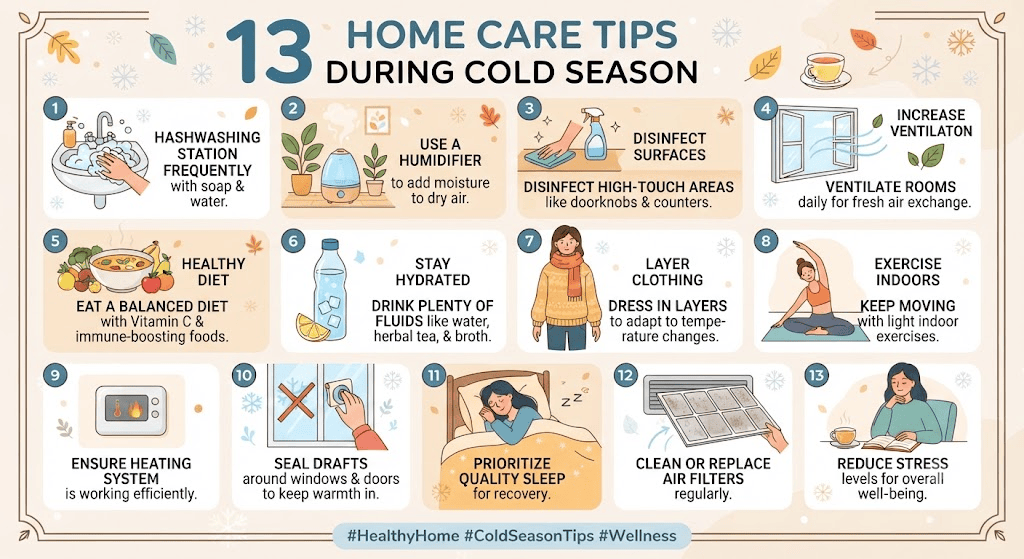
13 Home Care Tips During Cold Season
The arrival of the cold season brings a picturesque landscape of frost-covered windows and cozy evenings by the fire. However, it also heralds the “sick season,” a period where the drop in temperature and humidity levels creates a playground for viruses and respiratory discomfort. Managing your health and home during these months requires more than just a heavy coat; it demands a holistic approach to nutrition, environment, and self-care.
This comprehensive guide explores 13 essential home care tips to keep you and your family thriving throughout the winter months. From optimizing your indoor air quality to mastering the most restorative recipes in the culinary world, this guide is your roadmap to a healthier winter.
1. Master the Art of Indoor Humidity Control
During the cold season, the air outside holds less moisture, and our indoor heating systems further strip the air of humidity. This dry environment can lead to parched skin, irritated sinuses, and a higher susceptibility to airborne viruses.
Why Humidity Matters
When the mucous membranes in your nose and throat dry out, they become less effective at trapping pathogens. Maintaining an indoor humidity level between 30% and 50% is the “sweet spot” for human health. It keeps your respiratory tract moist and helps reduce the lifespan of certain viruses in the air.
How to Manage It
- Invest in a Hygrometer: A small, inexpensive device that measures humidity.
- Use a Humidifier: Clean it daily to prevent mold growth.
- Simmer Water on the Stove: A natural way to add moisture (and pleasant scents) to the air.
2. Fortify Your Body with Golden Turmeric Nutrition
Nutrition is your first line of internal defense. Turmeric, containing the active compound curcumin, is a potent anti-inflammatory and antioxidant. Incorporating “Golden Milk” into your nightly routine can soothe the body and prep the immune system.
Recipe 1: Restorative Golden Turmeric Milk
This ancient Ayurvedic beverage is designed to reduce inflammation and promote restful sleep during cold nights.
Ingredients Form:
| Ingredient | Quantity | Purpose |
|---|---|---|
| Unsweetened Almond or Coconut Milk | 2 Cups | Creamy base for nutrients |
| Turmeric Powder (Organic) | 1.5 Teaspoons | Anti-inflammatory agent |
| Fresh Ginger (Grated) | 1 Teaspoon | Digestive aid and warmth |
| Black Pepper (Freshly ground) | 1/4 Teaspoon | Activates Curcumin absorption |
| Cinnamon Powder | 1/2 Teaspoon | Blood sugar regulation |
| Raw Honey or Maple Syrup | 1 Tablespoon | Natural sweetener |
| Coconut Oil or Ghee | 1 Teaspoon | Healthy fats for absorption |
How to Cook Detail:
- Preparation: Place a small saucepan over medium-low heat.
- Combine Liquid and Fats: Pour the plant-based milk into the pan and add the coconut oil or ghee. The fat is crucial because curcumin is fat-soluble.
- Add Spices: Whisk in the turmeric, grated ginger, black pepper, and cinnamon.
- Simmer: Bring the mixture to a very gentle simmer. Do not let it reach a rolling boil, as high heat can degrade some of the delicate compounds. Simmer for about 5 to 10 minutes to allow the flavors and medicinal properties to infuse.
- Strain: Pour the milk through a fine-mesh strainer into two mugs to remove the ginger bits and any clumps of spices.
- Sweeten: Once the milk has cooled slightly (to preserve the enzymes in the honey), stir in your sweetener of choice.
- Serve: Drink while warm before bed.
3. Optimize Your Sleep Hygiene for Recovery
The body does its most significant repair work during deep sleep. During the cold season, the days are shorter, which naturally signals our bodies to rest more. However, modern lighting and heating can disrupt this rhythm.
Tips for Winter Sleep
- Temperature Regulation: Keep your bedroom slightly cool (around 65°F or 18°C) but use heavy blankets for warmth. This mimics the body’s natural drop in temperature during sleep.
- Block Blue Light: Use “warm” lighting in the evenings to encourage melatonin production.
- Weighted Blankets: These can reduce anxiety and provide the physical warmth needed during freezing nights.
4. Harness the Healing Power of Bone Broth
Bone broth is a cornerstone of traditional healing. It is rich in collagen, glycine, and minerals that support the gut lining—where 70% of your immune system resides.
Recipe 2: 24-Hour Immune-Boosting Bone Broth
This broth serves as a base for soups or can be sipped like tea to provide deep nourishment.
Ingredients Form:
| Ingredient | Quantity | Purpose |
|---|---|---|
| Beef or Chicken Bones (Roasted) | 2-3 Pounds | Source of collagen and minerals |
| Apple Cider Vinegar | 2 Tablespoons | Helps extract minerals from bones |
| Carrots (Large chunks) | 2 Whole | Vitamin A and sweetness |
| Celery Stalks | 3 Stalks | Minerals and flavor |
| Onion (Halved, skin on) | 1 Large | Quercetin and deep color |
| Garlic Cloves (Smashed) | 6 Cloves | Allicin for immunity |
| Peppercorns and Bay Leaves | 1 Teaspoon / 2 leaves | Flavor and digestion |
| Filtered Water | 1 Gallon (Approx) | Extraction medium |
How to Cook Detail:
- Roast the Bones: If using raw bones, place them on a baking sheet and roast at 400°F (200°C) for 30 minutes until browned. This significantly improves the flavor of the final broth.
- Assembly: Place the roasted bones into a large slow cooker or a heavy-bottomed stockpot.
- Add Acid: Pour the water over the bones and add the apple cider vinegar. Let it sit for 30 minutes. The acidity helps break down the bone matrix to release nutrients.
- Add Vegetables: Add the carrots, celery, onion (the skin adds a beautiful golden color), garlic, and spices.
- Simmering: Bring to a boil, then immediately reduce to the lowest possible simmer.
- If using a stockpot: Simmer for 12-24 hours.
- If using a slow cooker: Set to “Low” for 24 hours.
- Skimming: Periodically skim any foam or “scum” that rises to the top during the first few hours.
- Straining: Once finished, strain the liquid through a fine sieve or cheesecloth. Discard the solids.
- Storage: Allow to cool before storing in glass jars. A layer of fat will form on top—this seals the broth and can be removed before consuming.
5. Implement a “High-Touch” Disinfection Routine
Cold and flu viruses can live on hard surfaces for several hours. During the cold season, common areas become “hot zones” for transmission.
Strategic Cleaning
Focus on the “Magnificent Seven” high-touch areas:
- Doorknobs and handles.
- Light switches.
- Refrigerator and microwave handles.
- Remote controls.
- Keyboards and tablets.
- Faucets.
- Staircase railings.
Use a disinfectant that is effective against viruses, or a natural solution of 70% isopropyl alcohol for sensitive electronics.
6. Soothe the Throat with Fermented Remedies
A scratchy throat is often the first sign of a seasonal illness. Instead of reaching for sugary lozenges, look to fermented honey and lemon.
Recipe 3: Fermented Honey, Lemon, and Ginger Syrup
This potent syrup acts as a natural cough suppressant and throat coat.
Ingredients Form:
| Ingredient | Quantity | Purpose |
|---|---|---|
| Raw, Unfiltered Honey | 1 Cup | Antibacterial and soothing |
| Fresh Lemons (Sliced) | 2 Medium | Vitamin C and acidity |
| Fresh Ginger Root (Sliced) | 3-inch Piece | Anti-nausea and warming |
| Fresh Thyme Sprigs | 3 Sprigs | Antimicrobial for lungs |
How to Cook (Prepare) Detail:
- Sanitize: Ensure a pint-sized glass jar is perfectly clean and dry.
- Layering: Place a layer of lemon slices at the bottom, followed by a few slices of ginger and a sprig of thyme.
- Pour Honey: Drizzle enough raw honey to cover the layer completely.
- Repeat: Continue layering lemon, ginger, and thyme until the jar is almost full, leaving about an inch of headspace.
- Submerge: Pour the remaining honey over the top. Use a clean spoon to press down the lemons to release some juice and ensure no air bubbles are trapped.
- Fermentation/Infusion: Close the lid tightly. Store in a cool, dark place for 3 to 5 days. You will notice the honey becomes much thinner as the lemon juice draws out.
- Usage: After 5 days, store the jar in the refrigerator. Take a spoonful of the syrup directly, or stir it into warm (not boiling) water for a soothing tea. The lemons and ginger can also be eaten.
7. Hydrate Beyond Plain Water
In winter, we lose our thirst reflex, but the dry air means we lose significant moisture through respiration. Staying hydrated keeps your mucus thin and easy to clear.
Beyond the Tap
- Herbal Teas: Peppermint, Rooibos, and Chamomile.
- Infused Water: Add cucumber or orange slices to room-temperature water.
- Hydrating Foods: Incorporate cucumbers, celery, and citrus fruits into your snacks.
8. Prioritize Vitamin-Rich “Glow” Foods
Your skin and immune system both need Vitamin A, C, and E during the winter. Roasted vegetables provide the warmth your body craves while delivering concentrated nutrients.
Recipe 4: Roasted Garlic and Cauliflower “Immunity” Soup
This creamy, dairy-free soup is packed with Allicin (from garlic) and Vitamin C (from cauliflower).
Ingredients Form:
| Ingredient | Quantity | Purpose |
|---|---|---|
| Large Head of Cauliflower | 1 Head | High Vitamin C and fiber |
| Garlic Bulbs | 2 Whole Bulbs | Natural antibiotic properties |
| Vegetable or Bone Broth | 4 Cups | Liquid base |
| Large Onion (Diced) | 1 Whole | Prebiotic fiber |
| Olive Oil | 3 Tablespoons | Healthy fats |
| Nutritional Yeast | 2 Tablespoons | Vitamin B12 and cheesy flavor |
| Salt and White Pepper | To taste | Seasoning |
How to Cook Detail:
- Roasting: Preheat your oven to 400°F (200°C). Cut the cauliflower into florets. Slice the tops off the garlic bulbs to expose the cloves.
- Prep for Oven: Place cauliflower on a baking sheet. Place garlic bulbs on a piece of foil, drizzle with a little olive oil, and wrap tightly. Drizzle olive oil over the cauliflower. Roast both for 30-35 minutes until the cauliflower is charred at the edges and garlic is soft.
- Sauté: In a large pot, sauté the diced onion in a bit of oil until translucent (about 5 minutes).
- Combine: Squeeze the roasted garlic cloves out of their skins into the pot. Add the roasted cauliflower and the broth.
- Simmer: Bring to a simmer for 10 minutes to allow flavors to meld.
- Blend: Use an immersion blender (or transfer to a regular blender) and blend until completely smooth.
- Final Touch: Stir in the nutritional yeast for a boost of B-vitamins and a savory depth. Season with salt and pepper.
- Serve: Garnish with a drizzle of olive oil and fresh parsley.
9. Steam Therapy for Lung Health
When the air is cold and dry, your lungs can feel tight. Steam inhalation is an age-old method to open airways and loosen phlegm.
The Home Steam Method
- Boil Water: Bring a pot of water to a boil.
- Essential Oils: Remove from heat and add 2 drops of Eucalyptus or Peppermint oil.
- The Tent: Place your face over the pot (not too close to avoid burns) and drape a towel over your head and the pot.
- Breathe: Breathe deeply through your nose for 5-10 minutes. This hydrates the respiratory tract directly.
10. Master the “Gold Standard” Chicken Soup
There is a reason why “Jewish Penicillin” is famous. Research suggests that chicken soup may have a mild anti-inflammatory effect, helping to reduce the symptoms of upper respiratory infections.
Recipe 5: Traditional Homemade Chicken Noodle Soup
This version focuses on a rich, from-scratch broth and plenty of vegetables.
Ingredients Form:
| Ingredient | Quantity | Purpose |
|---|---|---|
| Whole Organic Chicken | 3-4 Pounds | Protein and broth base |
| Carrots (Sliced) | 3 Large | Beta-carotene |
| Celery (Sliced) | 3 Stalks | Texture and minerals |
| Large Onion (Chopped) | 1 Whole | Flavor base |
| Fresh Parsley (Chopped) | 1/2 Cup | Vitamin K and freshness |
| Wide Egg Noodles | 2 Cups | Comforting carbohydrates |
| Sea Salt and Black Pepper | To taste | Mineral balance |
| Water | Enough to cover chicken | Extraction |
How to Cook Detail:
- The Base: Place the whole chicken in a very large stockpot. Add the onion and cover with water.
- First Simmer: Bring to a boil, then reduce heat and simmer for about 60-90 minutes, or until the chicken is falling off the bone.
- The Separation: Remove the chicken from the pot. Let it cool enough to handle. Strain the liquid to remove the boiled onion and any bits. This is now your “Liquid Gold.”
- Shredding: Remove the skin and bones from the chicken and shred the meat into bite-sized pieces. Set aside.
- The Vegetables: Return the broth to the pot. Add the carrots and celery. Simmer for 15 minutes until the vegetables are tender.
- The Noodles: Add the egg noodles to the pot and cook according to the package instructions (usually 7-9 minutes).
- The Reunion: Once the noodles are soft, stir the shredded chicken back into the pot.
- Seasoning: Add the fresh parsley, salt, and plenty of black pepper.
- Serve: Bowl up immediately. The heat and the cysteine (an amino acid) released from the chicken will help thin mucus in the lungs.
11. Support the Respiratory System with Herbal Infusions
Some herbs have specific affinities for the lungs. Mullein, for example, is an expectorant that helps the body expel excess mucus, while thyme is a powerful antiseptic.
Recipe 6: Lung-Clearing Mullein and Thyme Infusion
A targeted herbal tea for those dealing with chest congestion.
Ingredients Form:
| Ingredient | Quantity | Purpose |
|---|---|---|
| Dried Mullein Leaf | 1 Tablespoon | Expectorant (clears mucus) |
| Fresh or Dried Thyme | 1 Teaspoon | Antispasmodic and antiseptic |
| Peppermint Leaf | 1 Teaspoon | Opens airways (menthol) |
| Boiling Water | 2 Cups | Extraction |
| Raw Honey | To taste | Throat coating |
How to Cook Detail:
- Infusion Vessel: Place the mullein, thyme, and peppermint into a French press or a teapot with a built-in strainer.
- Warning: Mullein leaves have tiny hairs that can irritate the throat if not strained properly. Using a paper coffee filter or a very fine mesh is recommended.
- Steeping: Pour boiling water over the herbs.
- Time: Cover and let steep for at least 10-15 minutes. Herbal infusions for medicinal purposes require a longer steep time than standard tea.
- Strain: Press the French press or pour through a fine strainer into a mug.
- Enhance: Add honey and a squeeze of lemon if desired.
- Dosage: Sip slowly while breathing in the steam from the mug. Drink 2-3 times a day during peak congestion.
12. Protect the “Winter Skin” Barrier
The skin is your largest organ and your first barrier against the outside world. Cold air and hot showers can strip the lipid barrier, leading to “winter itch” and cracking, which can allow bacteria to enter.
Skin Care Protocol
- Lower the Shower Temperature: Lukewarm water is much kinder to your skin than scalding hot water.
- Damp Priming: Apply your moisturizer or body oil while your skin is still slightly damp to lock in the hydration.
- Choose Occlusives: Look for ingredients like shea butter, beeswax, or jojoba oil that create a physical barrier on the skin.
13. Maintain Mental Wellness and Light Exposure
Seasonal Affective Disorder (SAD) is a real phenomenon where the lack of sunlight affects serotonin levels. A healthy home care routine must include mental health.
Winter Wellness Strategies
- Morning Light: Try to get 10-15 minutes of direct sunlight as soon as you wake up. If you live in a dark climate, use a 10,000-lux light therapy box.
- Movement: Even a 20-minute indoor yoga session or stretching routine can boost endorphins and improve circulation.
- Connection: Winter can be isolating. Make a conscious effort to call a friend or host a small, healthy soup night to maintain social bonds.
Conclusion: A Holistic Winter Strategy
Survival during the cold season isn’t just about avoiding germs; it’s about creating an environment—both in your home and in your body—where health can flourish. By controlling your humidity, feeding your body nutrient-dense broths and “glow” foods, and prioritizing rest and hygiene, you turn your home into a sanctuary of wellness.
Remember, these recipes and tips are most effective when used consistently. Don’t wait until you feel a tickle in your throat to start your “Golden Milk” or bone broth routine. Start now, and give your body the tools it needs to navigate the frost and cold with strength and vitality. Stay warm, stay hydrated, and enjoy the unique pace of the winter season.