
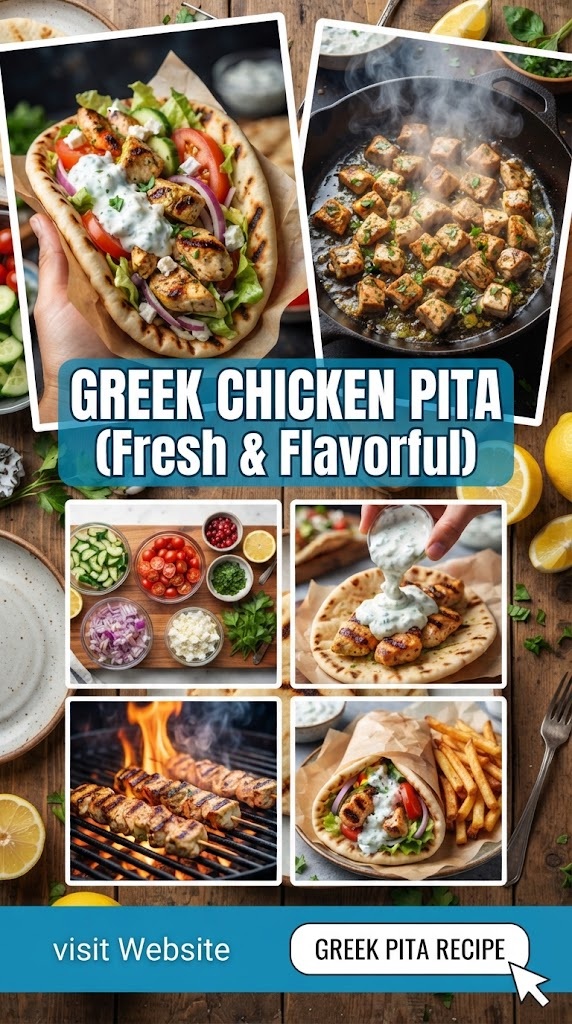
Greek Chicken Pita (Fresh & Flavorful)
The Greek chicken pita, often referred to as chicken souvlaki in its most authentic form, is more than just a sandwich. It is a culinary icon that encapsulates the essence of the Mediterranean diet: fresh ingredients, bold aromatics, lean proteins, and a balance of textures that dance on the palate. Whether you are wandering the sun-drenched streets of Athens or looking for a healthy, vibrant weeknight dinner in a busy American household, the Greek chicken pita stands as a testament to the power of simple, high-quality ingredients.
In this comprehensive guide, we will dive deep into the anatomy of the perfect pita, exploring the science of the marinade, the secrets of the fluffiest bread, the chemistry of a sharp tzatziki, and the cultural history that makes this dish a global favorite.
The Cultural Heritage of the Souvlaki and Pita
To understand the Greek chicken pita, one must first understand souvlaki. The word “souvlaki” derives from the Medieval Greek “souvla,” meaning “skewer.” Excavations in Greece have unearthed stone supports for skewers used by the Mycenaeans as far back as the 17th century BC. This is a dish with millennia of history.
While the “gyro” (meat cooked on a vertical rotisserie) is perhaps more famous in international fast-food circles, the chicken pita made with souvlaki skewers is the preferred choice for those seeking a lighter, more artisanal experience. It represents the “Hellenic” way of eating—uncomplicated, charred over an open flame, and served with pride.
The Anatomy of the Perfect Greek Chicken Pita
A truly exceptional Greek chicken pita is a symphony of five distinct components. If one fails, the entire experience is compromised.
- The Chicken (The Soul): Succulent, charred, and deeply infused with lemon and oregano.
- The Tzatziki (The Heart): A cool, creamy, garlic-forward sauce that provides the necessary moisture.
- The Pita (The Vessel): Soft, pillowy, and slightly charred—never dry or brittle.
- The Fresh Salad (The Crunch): Ripe tomatoes, crisp cucumbers, and sharp red onions.
- The Extras (The Flair): Salty feta cheese, Kalamata olives, or even a handful of golden fries tucked inside (the authentic Greek street-food way).
Part I: The Chicken – Mastering the Marinade
The secret to a world-class Greek chicken pita lies in the marinade. Because chicken breast can easily become dry, the marinade serves two purposes: flavoring and tenderizing.
The Science of Tenderness
In Greek cooking, the “Holy Trinity” of marinade ingredients consists of acid (lemon juice or red wine vinegar), fat (extra virgin olive oil), and aromatics (garlic and dried Greek oregano).
- Extra Virgin Olive Oil: Acts as a conduit for fat-soluble flavors in the herbs and creates a barrier that prevents the chicken from sticking to the grill.
- Lemon Juice: The citric acid breaks down the tough protein fibers, but caution is required. Marinating for more than 4-6 hours can actually “cook” the chicken (like ceviche), leading to a rubbery texture.
- Greek Oregano: Unlike Mexican oregano, Greek oregano (Rigani) is savory and earthy. It is the signature scent of the Aegean.
The Best Cut: Thighs vs. Breasts
While many health-conscious eaters reach for chicken breast, traditionalists often prefer boneless, skinless chicken thighs. Thighs have a higher fat content, which means they remain juicy even under high heat and offer a deeper, more “chickeny” flavor. If you choose breast, ensure you cut it into uniform 1-inch cubes to ensure even cooking.
Part II: The Ultimate Authentic Tzatziki
Do not settle for store-bought tzatziki. Most commercial versions use sour cream or thin yogurt filled with thickeners. Real tzatziki is a revelation of texture.
The Importance of Strained Yogurt
You must use authentic Greek yogurt—specifically, “strained” yogurt. If you can’t find it, strain regular full-fat yogurt through a cheesecloth for at least four hours. The result should be thick enough to hold its shape on a spoon.
The Cucumber Secret
The biggest mistake people make is adding watery cucumber to the sauce. This results in a puddle at the bottom of your pita.
- Grate the English cucumber (hothouse cucumber).
- Place it in a clean kitchen towel.
- Squeeze with all your might until every drop of excess water is gone.
- Only then, fold it into the yogurt.
The Garlic Kick
Tzatziki should have a “bite.” Use fresh garlic cloves mashed into a paste with a pinch of salt. This ensures the garlic flavor is distributed evenly without the unpleasantness of biting into a raw chunk.
Part III: The Pita Bread – Choosing and Preparing
In the United States, “pita” often refers to the pocket-style bread. However, for a true Greek chicken pita, you want pocketless pita. This variety is thicker, softer, and more pliable, making it perfect for wrapping around the fillings without breaking.
How to Revive Pita Bread
Never serve pita straight from the bag. To achieve that restaurant-quality texture:
- The Skillet Method: Brush the pita lightly with olive oil and a sprinkle of dried oregano. Heat in a cast-iron skillet over medium heat for about 30 seconds per side until bubbles form and the bread is soft.
- The Open Flame: Using tongs, char the pita directly over a gas burner for a smoky aroma.
Part IV: Step-by-Step Recipe: The “Athens Street” Chicken Pita
Ingredients
For the Chicken Souvlaki:
- 1.5 lbs chicken breast or thighs, cut into 1-inch pieces
- 1/4 cup high-quality Greek extra virgin olive oil
- 3 tbsp fresh lemon juice
- 4 cloves garlic, minced
- 2 tsp dried Greek oregano
- 1 tsp sea salt
- 1/2 tsp cracked black pepper
For the Tzatziki:
- 2 cups full-fat Greek yogurt
- 1 large English cucumber, grated and squeezed dry
- 3 cloves garlic, pasted
- 1 tbsp extra virgin olive oil
- 1 tbsp fresh dill, finely chopped
- A squeeze of lemon juice
For the Assembly:
- 4-6 pocketless pitas
- 2 ripe Roma tomatoes, sliced into wedges
- 1 small red onion, thinly sliced (soaked in cold water to remove the “bite”)
- Fresh parsley, chopped
- Optional: Crumbled feta, Kalamata olives, or French fries
Instructions
- Marinate: In a large bowl, whisk together the olive oil, lemon juice, garlic, oregano, salt, and pepper. Add the chicken pieces, tossing to coat thoroughly. Cover and refrigerate for at least 30 minutes (preferably 2 hours).
- Make the Tzatziki: Combine the strained yogurt, squeezed cucumber, garlic paste, olive oil, and dill. Stir well and let it sit in the fridge. The flavors improve as it rests.
- Grill the Chicken: Thread the chicken onto wooden skewers (soak them in water first to prevent burning). Heat a grill or griddle pan to medium-high. Grill the skewers for 3-4 minutes per side, or until the internal temperature reaches 165°F (74°C). Let the meat rest for 3 minutes before removing it from the skewers.
- Warm the Bread: Lightly oil the pitas and warm them until soft and pliable.
- The Assembly: Spread a generous dollop of tzatziki down the center of the warm pita. Lay 4-5 pieces of chicken on top. Add tomatoes, onions, and parsley.
- The Wrap: Fold the sides of the pita toward the center, creating a cone shape. Wrap the bottom half in parchment paper or aluminum foil to hold it all together.
Part V: The Art of the Side Dish
While the Greek chicken pita is a complete meal in itself, pairing it with the right sides elevates the dining experience to a full Mediterranean feast.
1. Lemon Oregano Potatoes (Patates Lemonates)
These are not your average roasted potatoes. They are braised in a mixture of chicken stock, lemon juice, olive oil, and plenty of garlic until the liquid is absorbed and the potatoes are “meltingly” soft on the inside with a golden crust.
2. The Horiatiki (Village) Salad
Often called a “Greek Salad” in the West, the authentic version contains no lettuce. It is a chunky mix of tomatoes, cucumbers, green bell peppers, red onions, olives, and a massive block of feta cheese on top, finished with a dousing of olive oil.
3. Greek Fries
If you want the true street-food experience, serve your pita with fries seasoned with sea salt and dried oregano. In Greece, it is standard practice to put the fries inside the wrap.
Part VI: Health Benefits of the Greek Chicken Pita
The popularity of the Greek chicken pita isn’t just about flavor; it is one of the most nutritionally balanced “fast foods” in existence.
- Lean Protein: Chicken provides essential amino acids for muscle repair and satiety.
- Probiotics: Authentic Greek yogurt is a fermented food that supports gut health and a strong immune system.
- Healthy Fats: Extra virgin olive oil is rich in monounsaturated fats and polyphenols, which are known to reduce inflammation and support heart health.
- Lycopene and Antioxidants: The combination of fresh tomatoes, onions, and garlic provides a powerhouse of antioxidants that fight oxidative stress.
Part VII: Variations and Modern Twists
The beauty of the Greek chicken pita lies in its versatility. Here are some ways to adapt the recipe for different dietary needs:
The Low-Carb “Pita” Bowl
Skip the bread entirely. Place a bed of cauliflower rice or shredded romaine lettuce in a bowl. Top with the grilled chicken, a massive scoop of tzatziki, and all the traditional salad toppings. This provides the same flavor profile with significantly fewer carbohydrates.
Spicy Mediterranean Wrap
While traditional Greek food isn’t “hot,” many modern variations include a spread of Tirokafteri (a spicy feta dip made with roasted red peppers and chili flakes) instead of or alongside the tzatziki.
The Vegetarian “Souvlaki”
Substitute the chicken with halloumi cheese or thick slices of grilled eggplant and zucchini. Halloumi is particularly excellent as it has a high melting point, allowing it to get beautifully charred on the grill while remaining chewy.
Part VIII: Pro Tips for the Home Cook
To truly master the Greek chicken pita, keep these “cheats” in mind:
- The Onion Soak: If you find raw red onions too overpowering, soak the slices in ice-cold water for 10 minutes. This retains the crunch but removes the sulfurous sting.
- Dried vs. Fresh Oregano: In the marinade, dried oregano is actually superior. It has a more concentrated, savory flavor that stands up well to high-heat grilling.
- Don’t Overcrowd the Pan: If you are cooking the chicken in a skillet rather than on a grill, cook in batches. Overcrowding the pan causes the temperature to drop, and the chicken will “steam” in its own juices rather than searing.
- The Resting Phase: Always let your grilled chicken rest. This allows the juices to redistribute, ensuring every bite is moist.
Part IX: Selecting the Best Ingredients in the USA
For readers in the United States, finding authentic ingredients can sometimes be a challenge, but the surge in popularity of Mediterranean food has made it easier.
- Olive Oil: Look for “First Cold Pressed” and check for a harvest date. California Olive Ranch offers high-quality options, or look for imported Cretan oils.
- Feta: Avoid the pre-crumbled “shaker” feta. Buy a block of feta in brine (preferably sheep’s milk or a sheep/goat blend). The difference in creaminess and saltiness is night and day.
- Yogurt: Brands like Fage are widely available and offer a very close approximation to what you would find in a Greek galaktopolio (dairy shop).
Part X: Frequently Asked Questions (FAQs)
Can I make the chicken in an Air Fryer?
Yes! Air frying chicken souvlaki is a fantastic way to get a “grilled” texture without a grill. Cook the cubes at 400°F (200°C) for 10-12 minutes, shaking the basket halfway through.
How long does the tzatziki last?
Homemade tzatziki will last in the refrigerator for about 3-4 days. Note that the garlic flavor will intensify significantly by day two!
Is there a gluten-free alternative for pita?
Many brands now offer gluten-free pita rounds. Alternatively, using large collard green leaves or Bibb lettuce as a wrap works beautifully for those avoiding gluten.
What is the best way to reheat leftovers?
To keep the chicken moist, reheat it in a pan with a splash of water or chicken broth over medium heat. Do not microwave the assembled pita; reheat the components separately and assemble fresh.
Conclusion: The Joy of the Mediterranean Table
The Greek chicken pita is more than a recipe; it is an invitation to slow down and enjoy the vibrance of fresh food. It is a dish that bridges the gap between a quick lunch and a gourmet dinner. By mastering the simple techniques of marinating, searing, and sauce-making, you bring a piece of the Mediterranean sunshine into your own kitchen.
Whether you are cooking for a family of four or meal-prepping for a busy week, the fresh and flavorful Greek chicken pita is a timeless classic that never fails to satisfy. Grab your olive oil, fire up the grill, and prepare for a culinary journey that is as healthy as it is delicious. Kali Orexi! (Bon Appétit!)