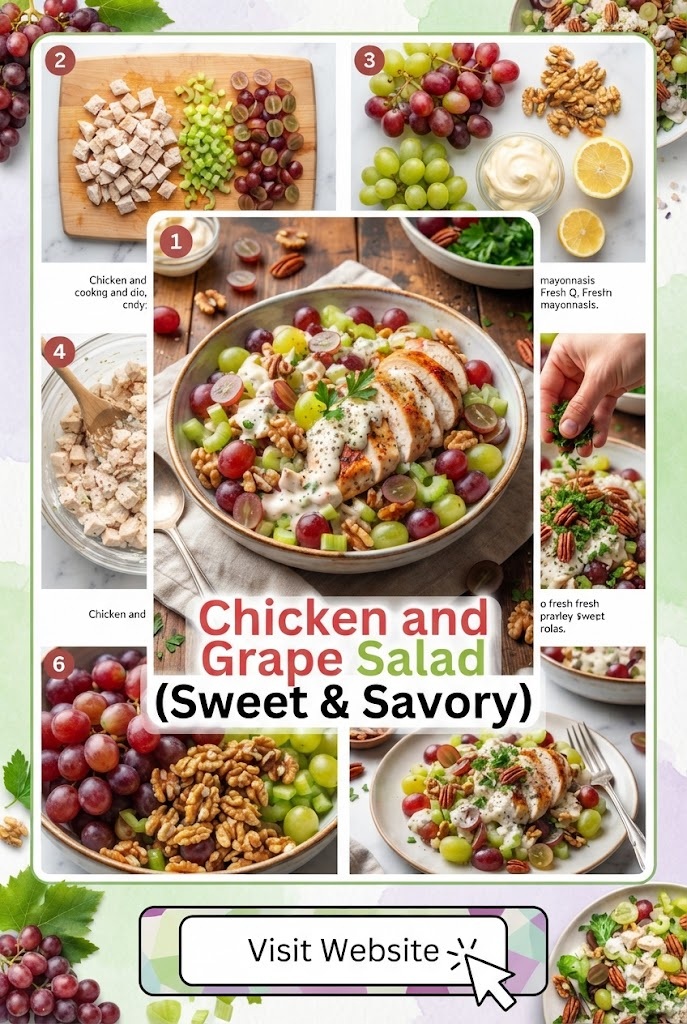
Chicken and Grape Salad (Sweet & Savory)
In the pantheon of classic American deli staples, few dishes achieve the sophisticated balance of flavors and textures quite like the Chicken and Grape Salad. It is a culinary paradox: humble enough for a Tuesday lunchbox yet elegant enough for a high-end wedding shower. This dish thrives on the interplay between the succulent, savory protein of the chicken and the explosive, sugary burst of fresh grapes.
When you bite into a well-crafted chicken and grape salad, you aren’t just eating a meal; you are experiencing a carefully orchestrated symphony of textures—the crunch of toasted nuts, the crispness of celery, the creaminess of the dressing, and the juicy snap of the fruit. In this comprehensive guide, we will dive deep into the history, the science of flavor pairing, the essential ingredients, and the professional techniques required to master this timeless dish.
The Science of Sweet and Savory: Why Grapes and Chicken Work
To understand why this salad is so addictive, we have to look at the culinary principle of “flavor layering.” Our palates are designed to respond positively to a combination of different taste sensations.
- Contrast: The saltiness of the seasoned chicken acts as a foil to the natural fructose in the grapes. This contrast prevents the palate from becoming “fatigued” by one singular flavor profile.
- Texture Profiles: A great salad isn’t just about taste; it’s about the “mouthfeel.” The soft, shredded or cubed chicken provides a base, while the grapes offer a refreshing liquid burst that cuts through the richness of a mayonnaise-based dressing.
- Acidity and Fat: Most chicken salad dressings involve mayonnaise or yogurt (fat). When you add a touch of lemon juice or vinegar (acid) and the natural tartness of a grape, it creates a balanced profile that feels light rather than heavy.
Choosing Your Star Ingredients
The quality of your chicken and grape salad is directly proportional to the quality of your ingredients. Because there are so few components, each one must be at its peak.
1. The Chicken: The Foundation
While you can use any chicken, the method of preparation changes the final result significantly.
- Rotisserie Chicken: The gold standard for convenience. The skin is flavorful, and the meat is usually very moist. It adds a depth of roasted flavor that poached chicken lacks.
- Poached Chicken Breast: For those who want a clean, classic look. Poaching in an aromatic broth (onion, carrot, celery, peppercorns) keeps the meat white and tender.
- Grilled Chicken: Best for those who enjoy a smoky undertone. The char marks provide an extra layer of complexity.
- Leftover Roast Chicken: This is the most sustainable way to make the salad. Ensure you remove the skin if you prefer a smoother texture.
2. The Grapes: The Jewel of the Dish
Not all grapes are created equal. For a chicken salad, you want:
- Red Seedless Grapes: These are the most popular choice. They offer a deep sweetness and a beautiful color contrast against the white chicken and green herbs.
- Green Seedless Grapes: These tend to be slightly more tart and provide a monochromatic, “fresh” look.
- Cotton Candy Grapes: If you want an ultra-sweet, dessert-like salad, these can be a fun twist, though they may overpower the savory elements.
- Preparation Tip: Always slice your grapes. For small grapes, a simple half-cut is sufficient. For larger grapes, consider quartering them to ensure every bite of the salad contains a piece of fruit.
3. The Crunch: Nuts and Vegetables
A salad without a crunch is just a mash.
- Celery: The essential aromatic. It provides a watery, crisp snap that is non-negotiable for traditionalists.
- Pecans or Walnuts: These should always be toasted. Toasting releases the oils and creates a much more robust flavor.
- Almonds: Sliced or slivered almonds offer a more delicate crunch.
- Red Onion or Shallots: Use these sparingly. You want a hint of piquancy without the “onion breath” taking over the sweet grapes.
The Master Recipe: Classic Sweet & Savory Chicken and Grape Salad
This recipe serves as the perfect baseline. It is balanced, creamy, and designed to hold up well in the refrigerator.
Ingredients
- Chicken: 4 cups cooked chicken, diced or shredded.
- Grapes: 1.5 cups red seedless grapes, halved.
- Celery: 2 stalks, finely diced.
- Nuts: 1/2 cup toasted pecans, chopped.
- Onion: 1/4 cup red onion, minced (soak in cold water for 10 minutes to mellow the flavor).
- Herbs: 2 tablespoons fresh flat-leaf parsley, chopped, and 1 tablespoon fresh dill or tarragon.
The Dressing
- Mayonnaise: 1 cup (use high-quality, full-fat mayo for the best mouthfeel).
- Greek Yogurt: 1/4 cup (adds a pleasant tang and lightens the calories).
- Lemon Juice: 1 tablespoon, fresh-squeezed.
- Dijon Mustard: 1 teaspoon (provides a subtle “kick”).
- Honey: 1 teaspoon (to bridge the gap between the savory chicken and sweet grapes).
- Salt and Black Pepper: To taste.
Instructions
- Prepare the Chicken: Ensure the chicken is completely cold. Mixing warm chicken with mayonnaise can cause the dressing to “break” or become oily.
- Mix the Base: In a large bowl, combine the chicken, grapes, celery, and onion.
- Whisk the Dressing: In a separate small bowl, whisk together the mayo, yogurt, lemon juice, Dijon, honey, salt, and pepper.
- Combine: Pour the dressing over the chicken mixture. Fold gently with a spatula to ensure everything is coated without mashing the grapes.
- Add the Crunch: Fold in the toasted pecans and fresh herbs last. This keeps the nuts from getting soggy.
- Chill: Cover and refrigerate for at least one hour. This allows the flavors to meld and the dressing to thicken.
Regional and Global Variations
The beauty of Chicken and Grape Salad is its versatility. Different cultures and regions have put their own spin on this classic.
1. The Southern Waldorf Twist
Inspired by the famous Waldorf Astoria Hotel in New York, the Southern version often leans into heavy pecans and the addition of diced Granny Smith apples alongside the grapes. The acidity of the apple complements the sweetness of the grape perfectly.
2. The Curried Chicken and Grape Salad
This is a favorite for those who find traditional mayo dressings too plain. By adding a tablespoon of mild yellow curry powder and a handful of golden raisins to the mix, you transform the salad into an exotic, aromatic delight. The curry spices play exceptionally well with the sweetness of the grapes.
3. The Mediterranean Style
For a lighter, “no-mayo” version:
- Use a base of olive oil and lemon juice.
- Add halved grapes, feta cheese, and sliced cucumbers.
- Use fresh mint instead of parsley.
- Replace pecans with pine nuts or pistachios.
4. The Napa Valley Salad
In California wine country, this salad is often elevated with:
- Diced avocados.
- A dressing made with a white wine vinaigrette.
- Grapes that have been slightly roasted to concentrate their sugars.
Pro-Tips for the Best Texture and Flavor
If you want your salad to rival those found in high-end bistros, follow these professional secrets:
The “Dry Chicken” Cure
Chicken breast can often be dry. If using leftover chicken, “refresh” it by tossing the diced meat with a tablespoon of chicken broth or a splash of lemon juice 10 minutes before adding the dressing. This hydrates the protein fibers.
Mastering the Grapes
To prevent the salad from becoming too watery, ensure your grapes are completely dry after washing them. Moisture on the surface of the fruit will thin out your dressing, making it runny.
The Herb Factor
Never use dried herbs in a chicken and grape salad. The freshness of the dill, tarragon, or parsley is what provides the “top notes” of the flavor profile. Tarragon, in particular, has a slight licorice flavor that pairs famously well with chicken and fruit.
Toasting Your Nuts
Do not skip this step! Place your pecans or walnuts in a dry pan over medium heat for 3-5 minutes, shaking frequently. Once you can smell a nutty aroma, they are done. This simple step adds a smoky depth that balances the sugar in the grapes.
Serving Suggestions: How to Present Your Masterpiece
The way you serve your chicken and grape salad can change it from a casual snack to a formal meal.
1. The Classic Croissant Sandwich
This is perhaps the most iconic pairing. The buttery, flaky layers of a toasted croissant provide a rich vessel for the creamy salad.
- Pro Tip: Place a leaf of Bibb or Butter lettuce on the bottom half of the croissant first. This creates a moisture barrier and prevents the bread from getting soggy.
2. Lettuce Wraps
For a low-carb or keto-friendly option, use large Romaine or iceberg leaves. The extra crunch of the lettuce leaf complements the salad perfectly. This is an excellent option for summer picnics.
3. Elegant Endive Spears
For a sophisticated appetizer or cocktail party snack, spoon a small amount of the salad into individual Belgian endive leaves. They act as natural “boats” and look stunning on a platter.
4. The “Scoop” Salad
Serve a large scoop of the salad in the center of a bed of mixed greens. Garnish with extra halved grapes and a drizzle of balsamic glaze for a restaurant-quality presentation.
5. Sliders
Using sweet Hawaiian rolls, create small sliders for parties. The sweetness of the bread echoes the sweetness of the grapes.
Nutritional Breakdown: Is it Healthy?
Chicken and Grape Salad is often perceived as a “healthy” choice, but its nutritional profile depends heavily on the dressing.
- Protein: Chicken is an excellent source of lean protein, essential for muscle repair and satiety.
- Antioxidants: Grapes are rich in polyphenols and resveratrol, which support heart health and fight inflammation.
- Healthy Fats: If using a mayonnaise made with avocado oil or olive oil, you are consuming heart-healthy monounsaturated fats.
- Calorie Control: To make this a “diet-friendly” dish, replace half of the mayonnaise with non-fat Greek yogurt. You maintain the creaminess while significantly reducing the calorie and fat count.
Storage and Food Safety
Because this salad contains poultry and dairy (mayonnaise/yogurt), food safety is paramount.
- Refrigeration: The salad should never sit at room temperature for more than two hours (one hour if the temperature is above 90°F).
- Shelf Life: In an airtight container, chicken and grape salad will last for 3 to 5 days in the refrigerator.
- Can you freeze it? No. Mayonnaise-based dressings will “break” and separate when thawed, and the grapes will lose their structure and become mushy. This is a dish best enjoyed fresh or within a few days of preparation.
- Signs of Spoilage: If the salad develops an “off” smell, or if the dressing becomes excessively watery and yellowed, it is time to discard it.
Frequently Asked Questions (FAQs)
Can I use canned chicken?
While fresh or rotisserie chicken is preferred for texture, you can use canned chicken in a pinch. Be sure to drain it thoroughly and “fluff” it with a fork before adding the other ingredients.
What can I substitute for pecans?
If you have a nut allergy, toasted sunflower seeds or pumpkin seeds (pepitas) provide a great crunch. If you just don’t like pecans, walnuts or sliced almonds are the most common substitutes.
My salad is too dry. What should I do?
The chicken often absorbs the dressing as it sits. If your salad looks dry after chilling, fold in an extra tablespoon of mayonnaise or a splash of heavy cream or milk to loosen it up.
My salad is too sweet. How do I fix it?
If the grapes are exceptionally sweet, you can balance the salad by adding more salt, a dash of white pepper, or an extra teaspoon of Dijon mustard. Increasing the amount of celery can also add a savory “wateriness” that dilutes the sweetness.
Is red or green grape better?
Red grapes are generally sweeter and more visually appealing in the salad. Green grapes are more tart. Many chefs like to use a 50/50 mix of both for the best of both worlds.
The Cultural Heritage of Chicken and Fruit Salads
While the combination of meat and fruit might seem modern, it has deep roots in European and American history. The use of grapes specifically became popularized in the mid-20th century in the United States, often associated with “Ladies’ Luncheons.”
In the 1950s and 60s, these salads represented a move toward “light” dining. Today, the Chicken and Grape Salad has been reclaimed by the “Clean Eating” movement, emphasizing whole ingredients and fresh produce. It remains a staple of Southern hospitality, where a container of chicken salad is a common gift for neighbors, new parents, or grieving families.
Exploring Different Flavor Profiles: Beyond the Basics
If you have mastered the classic recipe, it is time to experiment with “Flavor Bridges.” These are ingredients that share chemical compounds with both chicken and grapes.
The “Herbalist” Version
- Ingredient: Fresh Basil and Mint.
- Why it works: Basil has a peppery sweetness that highlights the grape, while mint provides a cooling finish.
The “Spicy Sweet” Version
- Ingredient: Minced Jalapeño (seeds removed).
- Why it works: Capsaicin (the heat in peppers) triggers a physical response that makes the sugar in the grapes taste even more vibrant.
The “Smoky Orchard” Version
- Ingredient: Smoked Paprika and Bacon bits.
- Why it works: The saltiness of the bacon and the earthiness of the paprika create a “barbecue” vibe that is neutralized by the refreshing grape.
Preparing Chicken and Grape Salad for a Crowd
If you are tasked with making this for a graduation party, bridal shower, or family reunion, follow these logistical tips:
- Scaling: Allow for roughly 1/2 cup to 3/4 cup of salad per person if serving on sandwiches.
- Prep in Stages: You can chop the chicken and celery two days in advance. However, do not slice the grapes or toast the nuts until the day you intend to mix the salad.
- The “Dressing Buffer”: When making a large batch, keep a small jar of extra dressing on the side. Large quantities of chicken tend to soak up dressing faster, and you may need to “refresh” the bowl right before serving.
- Keep it Cold: Serve the salad in a bowl nested inside a larger bowl filled with ice. This ensures the mayonnaise stays at a safe temperature throughout the event.
Why This Recipe Stands the Test of Time
In a world of fleeting food trends, the Chicken and Grape Salad remains a constant. Its longevity is due to its versatility. It fits into a keto diet (without the bun), a high-protein athlete’s diet, and a child’s picky palate. It requires no actual “cooking” if you use a rotisserie chicken, making it the perfect “no-heat” summer meal.
The interplay of sweet and savory is a fundamental culinary joy. By combining the savory depth of chicken with the bright, sugary pop of a grape, you create a dish that satisfies every taste bud. Whether you are enjoying it on a sun-drenched porch or as a quick desk lunch, it remains one of the most balanced and delightful recipes in the American repertoire.
Final Summary for Success
To ensure your Sweet and Savory Chicken and Grape Salad is a success every single time, remember the “Four Pillars”:
- Cold Temperature: Start with cold chicken and chill the final product.
- Toasted Crunch: Always toast your nuts to prevent them from tasting like cardboard.
- Symmetry of Size: Try to dice your chicken and celery to the same size as your halved grapes for a consistent bite.
- Quality Mayo: Use a brand you love, as it provides the flavor backbone of the entire dish.
With these tips, recipes, and insights, you are ready to create a Chicken and Grape Salad that isn’t just a side dish—it’s the star of the show. Enjoy the process of finding your perfect balance of sweet and savory!