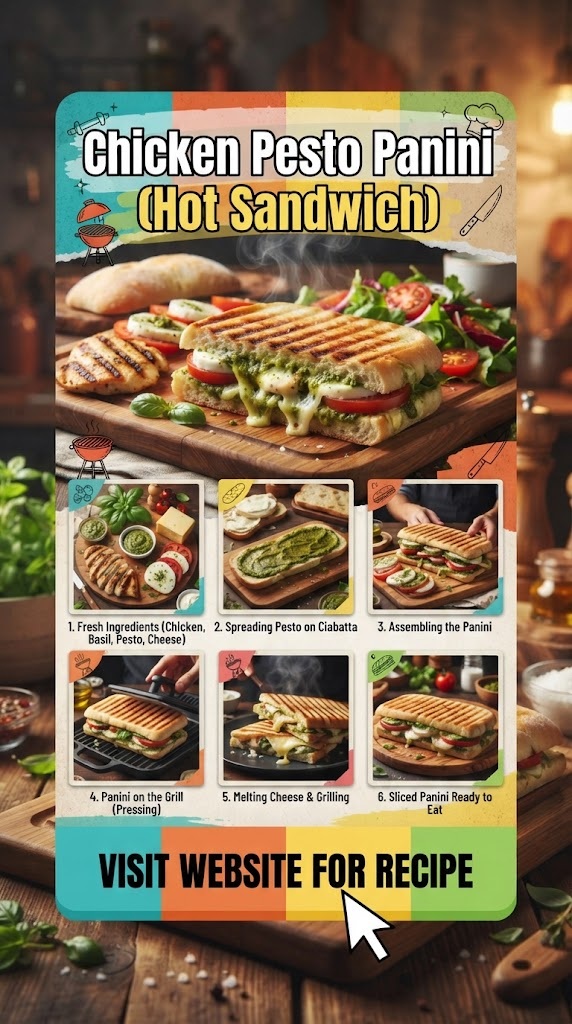
Chicken Pesto Panini (Hot Sandwich)
There are few culinary experiences as universally satisfying as biting into a perfectly toasted, golden-brown panini. When you combine the herbaceous, nutty brightness of basil pesto with tender, seasoned chicken and the gooey, molten stretch of melted cheese, you create something more than just a sandwich—you create a masterpiece of texture and flavor. The Chicken Pesto Panini has earned its place as a staple in cafes from Florence to New York City, and for good reason. It represents the pinnacle of “gourmet comfort food.”
In this comprehensive guide, we will dive deep into the world of the Chicken Pesto Panini. We will explore the science of the perfect press, the history of this Italian classic, the nuances of ingredient selection, and the professional techniques required to recreate a restaurant-quality experience in your own kitchen. Whether you are a home cook looking to elevate your lunch game or a food enthusiast curious about the anatomy of a great sandwich, this is the definitive resource for all things Chicken Pesto Panini.
Why the Chicken Pesto Panini is a Global Favorite
The popularity of the Chicken Pesto Panini lies in its balance. In the world of gastronomy, balance refers to the interplay of salt, fat, acid, and heat, as well as the contrast of textures.
- The Texture: You have the rigid, crunchy exterior of the bread contrasting with the soft, succulent chicken and the creamy, elastic cheese.
- The Flavor Profile: The pesto provides an earthy, herbaceous punch with a hint of garlic and citrus, which cuts through the richness of the cheese and the savory, protein-heavy chicken.
- The Convenience: It is a sophisticated meal that can be eaten with one hand, making it the ideal choice for a busy workday or a relaxed weekend brunch.
The Essential Ingredients: Quality Over Quantity
A panini is only as good as its individual components. Because the ingredient list is relatively short, each item must be of the highest quality. Let’s break down the four pillars of the Chicken Pesto Panini.
1. The Bread: The Foundation of Every Great Press
The bread is the most critical element of a panini. It acts as the structural housing for your ingredients and determines the final mouthfeel. Not all breads are created equal when it comes to the heat and pressure of a panini press.
- Ciabatta: This is the traditional choice. Its high hydration level results in large air pockets (alveoli) and a sturdy crust. When pressed, it becomes incredibly crispy while maintaining a chewy interior.
- Sourdough: For those who prefer a tangy kick, sourdough is an excellent alternative. Its dense structure holds up well under pressure and the acidity pairs beautifully with the garlic in the pesto.
- Focaccia: If you want a richer, more oily crust, focaccia is the way to go. The dimpled surface traps melted cheese and pesto, creating a flavor explosion in every bite.
- Bagels or Panini Rolls: While less traditional, these offer a softer bite and are great for kids or those who find ciabatta too hard on the palate.
2. The Pesto: The Vibrant Heart of the Sandwich
While you can certainly buy jarred pesto, making it from scratch elevates the sandwich from “good” to “extraordinary.” A classic Pesto alla Genovese consists of fresh basil, toasted pine nuts, garlic, high-quality extra virgin olive oil, and a blend of Parmesan and Pecorino cheese.
- Freshness Matters: Store-bought pesto often contains preservatives and cheaper oils that can turn bitter when heated. Fresh pesto remains bright and aromatic.
- Variations: Don’t be afraid to experiment. A “Sun-dried Tomato Pesto” (Pesto Rosso) adds a smoky sweetness, while a “Kale and Walnut Pesto” offers a modern, earthy twist.
3. The Chicken: Protein Perfection
The chicken should be moist and well-seasoned. Since the panini is cooked quickly, the chicken must be pre-cooked.
- Grilled Chicken Breast: Thinly sliced or “butterflied” chicken breasts provide a clean, smoky flavor. Marinating them in lemon, oregano, and garlic before grilling adds layers of complexity.
- Rotisserie Chicken: For a quick weeknight meal, shredded rotisserie chicken is a lifesaver. It is naturally moist and carries a deep, roasted flavor.
- Poached or Sous-vide: If you prefer a very tender, “melt-in-your-mouth” texture, poaching the chicken in aromatics or using a sous-vide circulator ensures it never becomes dry or rubbery.
4. The Cheese: The Glue That Holds It All Together
The cheese provides the “cheese pull” factor and acts as a barrier that prevents the pesto from making the bread soggy.
- Fresh Mozzarella: The classic choice. It has a mild flavor and incredible meltability. However, be sure to pat it dry to avoid excess moisture.
- Provolone: Offers a sharper, more pungent flavor that stands up well to the garlic in the pesto.
- Fontina: An Italian alpine cheese that melts beautifully and adds a nutty, buttery note.
- Havarti: A great “melt-all” cheese that is creamy and mild.
Step-by-Step: Crafting the Perfect Chicken Pesto Panini
Creating a panini is an art form that requires attention to detail. Follow these steps to ensure a perfect result every time.
Step 1: Preparation of Ingredients
Before you even turn on the heat, have everything ready. This is “mise en place.”
- Slice your bread horizontally.
- Thinly slice your cooked chicken.
- Slice your cheese and wash any additional vegetables (like spinach or tomatoes).
Step 2: The “Butter” Trick
For a truly golden-brown and crispy crust, you must coat the outside of the bread. While butter is traditional, many professional chefs use a thin layer of mayonnaise. Mayonnaise has a higher smoke point than butter and contains egg yolks, which leads to a more even, deep-brown crust without the risk of burning.
Step 3: Layering for Success
The order in which you stack your ingredients matters for both structural integrity and flavor distribution.
- Bottom Bread: Coat the inside with a generous layer of pesto.
- The Cheese Barrier: Place a slice of cheese directly on the pesto. This prevents the oil from the pesto from soaking into the bread.
- The Protein: Layer your sliced chicken evenly. Avoid “mounding” it in the middle; flat layers cook more evenly.
- The Add-ons: This is where you add spinach, arugula, or roasted red peppers.
- More Cheese: Add another layer of cheese on top of the chicken. This “glues” the top piece of bread to the filling.
- Top Bread: Spread more pesto on the inside and close the sandwich.
Step 4: The Pressing Process
If using a panini press, preheat it to medium-high. Place the sandwich in the center and close the lid. Do not press down too hard immediately; let the weight of the machine do the work.
- Timing: Usually 3 to 5 minutes.
- Indicator: You are looking for clear, dark grill marks and cheese that has begun to ooze out the sides.
No Panini Press? No Problem. Use a heavy cast-iron skillet. Place the sandwich in the pan and top it with another heavy pan (or a brick wrapped in foil). Flip halfway through to ensure both sides are equally crispy.
Mastering the Technique: Tips for Restaurant-Quality Results
- Don’t Overstuff: It is tempting to load the sandwich with a pound of chicken, but an overstuffed panini won’t heat through to the center before the outside burns. Aim for a balanced ratio.
- Temperature Control: If your press is too hot, the bread will char before the cheese melts. If it’s too cool, the bread will become tough and dry. Medium-high is the “Goldilocks” zone.
- The Resting Phase: Just like a steak, let your panini rest for 60 seconds after taking it off the heat. This allows the cheese to set slightly so it doesn’t all slide out when you take your first bite.
Variations to Elevate Your Sandwich Game
Once you have mastered the basic Chicken Pesto Panini, you can begin to customize it. Here are several gourmet variations:
1. The “California” Panini
Add sliced avocado, sprouts, and a squeeze of fresh lime juice after pressing. This adds a creamy, cool contrast to the hot sandwich.
2. The “Tuscan” Panini
Incorporate sun-dried tomatoes and balsamic glaze. The acidity of the balsamic balances the richness of the pesto and cheese.
3. The Spicy Kick
Add pickled jalapeños or a drizzle of spicy honey (hot honey). The sweetness and heat work wonders with the salty parmesan in the pesto.
4. The “Green Goddess”
Add a handful of fresh baby spinach and thinly sliced cucumber. This increases the nutritional profile and adds a fresh “crunch.”
The Nutritional Breakdown
A Chicken Pesto Panini is a hearty meal. While it is high in protein and healthy fats (from the olive oil and nuts), it can also be calorie-dense.
- Protein: Chicken and cheese provide a significant protein boost, essential for muscle repair and satiety.
- Fats: Extra virgin olive oil is a source of monounsaturated fats, which are heart-healthy.
- Carbohydrates: The bread provides the energy needed for daily activities. Opting for whole-grain sourdough can increase the fiber content.
- Micronutrients: Basil is rich in Vitamin K and antioxidants, while garlic offers immune-boosting properties.
Pairing Suggestions: Completing the Meal
To turn your panini into a full dining experience, consider these pairings:
Side Dishes
- Tomato Bisque: The acidity of tomato soup is the perfect foil for a cheesy panini. It’s a classic “dunking” partner.
- Arugula Salad: A simple salad with lemon vinaigrette and shaved parmesan provides a light, peppery contrast to the heavy sandwich.
- Sweet Potato Fries: For a more indulgent side, the sweetness of the potatoes complements the savory pesto.
Beverages
- Iced Green Tea: The tannins in the tea help cleanse the palate after the oily richness of the pesto.
- White Wine: A crisp Sauvignon Blanc or a Pinot Grigio has the acidity necessary to cut through the fats.
- Craft Soda: A lemon or blood orange sparkling soda adds a refreshing citrus note.
The History and Evolution of the Panini
The word “panini” is the plural of “panino,” which simply means “small bread roll” in Italian. While sandwiches have existed for centuries, the specific concept of the pressed sandwich gained popularity in the 1970s and 80s in Italian “paninoteche” (sandwich bars).
These bars became hubs for youth culture in Milan, giving rise to the “Paninari” subculture—a group of fashion-conscious young people who frequented these sandwich shops. From Italy, the trend migrated to the United States in the late 1990s, where the “panini press” became a must-have kitchen gadget. The Chicken Pesto Panini emerged as a favorite because it combined traditional Italian ingredients (pesto and mozzarella) with the American love for grilled chicken.
Common Mistakes to Avoid
Even seasoned cooks can stumble when making a panini. Avoid these pitfalls:
- Using Wet Ingredients: If you use tomatoes or fresh mozzarella, ensure they are blotted dry. Excess water leads to steam, and steam makes the bread soggy rather than crispy.
- Using Thin, Sliced Sandwich Bread: Standard white bread from a plastic bag is too soft. It will compress into a flat, gummy pancake under a press. Always use crusty, artisanal bread.
- Applying Pesto to the Outside: Never put pesto on the outside of the bread. The herbs will burn instantly in the press, creating a bitter taste. Keep the pesto on the inside and use butter or mayo on the outside.
- Slicing Too Early: If you cut the panini the moment it leaves the press, the molten cheese will flow out like lava. Wait one minute for the cheese to stabilize.
Catering and Meal Prep: Can You Make Paninis in Bulk?
The Chicken Pesto Panini is an excellent choice for hosting or meal prepping.
- For Parties: You can assemble the sandwiches up to 4 hours in advance and keep them in the refrigerator wrapped in parchment paper. Press them right as guests arrive to ensure they are hot and crispy.
- For Meal Prep: You can prepare the chicken and pesto ahead of time. While a pressed panini is best eaten fresh, you can reheat a previously pressed panini in an air fryer at 350°F for 3-4 minutes to restore its crunch.
Dietary Adaptations
- Gluten-Free: Use a high-quality gluten-free sourdough or ciabatta. Because GF bread can be drier, increase the amount of pesto or add a layer of butter to the inside to maintain moisture.
- Dairy-Free: Swap the mozzarella for a cashew-based vegan cheese and ensure your pesto is made with nutritional yeast instead of Parmesan.
- Low-Carb/Keto: Use a “chaffle” (cheese and egg waffle) as the “bread” or simply serve the chicken, pesto, and melted cheese over a bed of roasted zucchini.
The Science of the “Golden Crust”
Why does the bread turn that beautiful golden color? It’s a chemical reaction known as the Maillard Reaction. This occurs when the amino acids (proteins) and reducing sugars in the bread are heated. The reaction creates hundreds of different flavor compounds and that signature “toasted” aroma.
By adding a fat source (butter or mayo) to the outside of the bread, you are facilitating heat transfer. The fat conducts heat more efficiently than air, ensuring that every square millimeter of the bread surface reaches the temperature required for the Maillard Reaction to occur. This is why a “dry” toasted sandwich never tastes as good as one brushed with fat.
Frequently Asked Questions (FAQs)
Q: Can I use frozen chicken? A: You can, but it must be fully thawed and cooked before it goes into the panini. Cooking chicken from raw inside a panini press is dangerous, as the bread will burn long before the chicken reaches a safe internal temperature.
Q: How do I clean my panini press? A: The best way is to clean it while it is still slightly warm (but not hot). Use a damp paper towel or a specialized panini brush to wipe away melted cheese and crumbs. Avoid using harsh abrasives that can strip the non-stick coating.
Q: Is a panini press worth the investment? A: If you enjoy hot sandwiches, yes. A dedicated press provides even heat from both sides, which is difficult to replicate with a skillet. However, a “George Foreman” grill or a heavy cast-iron pan can serve as suitable substitutes.
Q: What is the best way to slice a panini? A: Always slice on a diagonal (bias). Not only does it make for a more beautiful presentation, but it also creates a sharper corner that is easier to take the first bite from.
Conclusion: The Ultimate Comfort Meal
The Chicken Pesto Panini is a testament to the idea that simple ingredients, when treated with respect and the right technique, can create something extraordinary. It is a dish that satisfies the soul as much as it satisfies hunger. By choosing the right bread, crafting a vibrant pesto, and mastering the art of the press, you turn a humble lunch into a culinary event.
Whether you are cooking for yourself on a Tuesday night or looking to impress guests at a weekend gathering, the Chicken Pesto Panini is a versatile, delicious, and timeless choice. So, fire up your press, gather your ingredients, and prepare to enjoy one of the world’s greatest hot sandwiches. The perfect crunch is just a few minutes away.