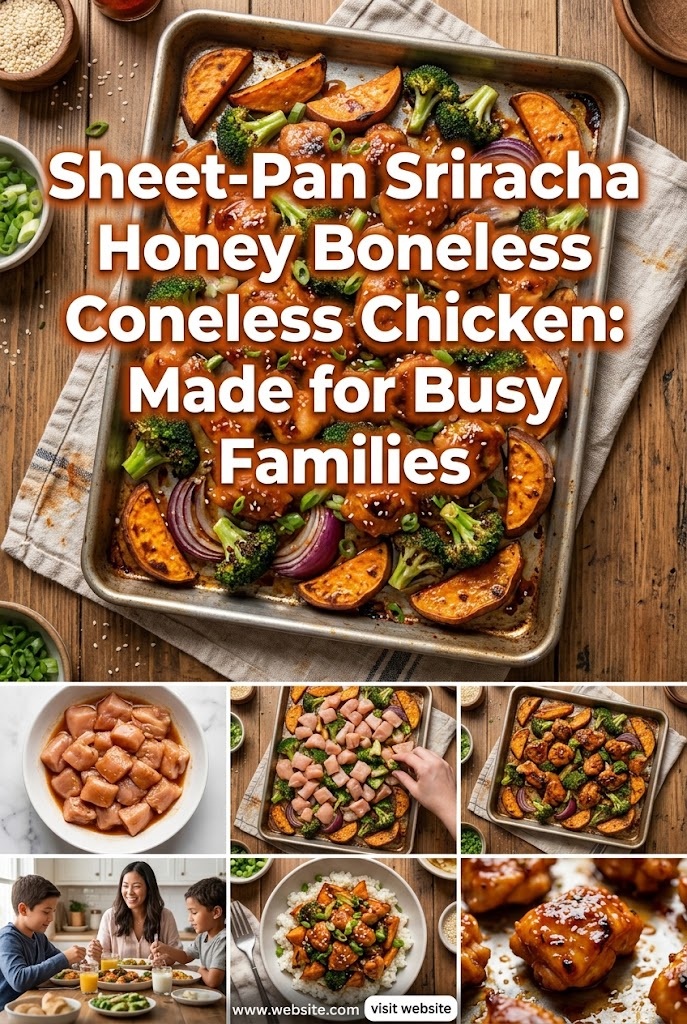
Sheet-Pan Sriracha Honey Boneless Chicken: Made for Busy Families
In the modern household, the hours between 5:00 PM and 7:00 PM are often referred to as the “witching hour.” Between finishing work, navigating school pickups, helping with homework, and managing extracurricular activities, the prospect of cooking a gourmet meal can feel like an impossible mountain to climb. Enter the sheet-pan dinner—a culinary revolution that has transformed the way busy families approach the evening meal. Among the vast sea of one-pan recipes, one stands out for its perfect balance of flavor, ease, and nutrition: Sheet-Pan Sriracha Honey Boneless Chicken.
This dish isn’t just a recipe; it’s a strategic solution for parents who refuse to sacrifice taste for time. It combines the fiery kick of Sriracha with the silky sweetness of honey, creating a glaze that caramelizes beautifully in a high-heat oven. Paired with crisp-tender vegetables, this meal offers a complete, balanced dinner with minimal cleanup. In this comprehensive guide, we will dive deep into why this recipe is a must-have in your weekly rotation, the science behind its flavor profile, and how to master the art of the sheet pan.
Why Sheet-Pan Meals are a Busy Parent’s Best Friend
The brilliance of a sheet-pan meal lies in its simplicity. Historically, a “balanced meal” implied multiple pots and pans: one for the protein, one for the starch, and perhaps a steamer for the vegetables. This resulted in a sink full of dishes and a cook who was too exhausted to enjoy the food.
The Efficiency of One-Pan Cooking
Sheet-pan meals utilize a single piece of equipment to cook an entire meal. By roasting everything together, you allow the flavors to mingle. As the chicken roasts, its juices baste the vegetables, infusing them with savory depth that steaming or boiling simply cannot replicate.
Hands-Off Cooking Time
Once the tray goes into the oven, your active work is done. This gives you a 20-to-30-minute window to tackle other tasks—whether that’s setting the table, catching up on emails, or finally having a moment of peace. The oven does the heavy lifting, ensuring a consistent heat that produces a perfect char and tender interior every time.
Minimal Cleanup
Cleanup is the bane of any home cook’s existence. With a sheet pan lined with parchment paper or heavy-duty aluminum foil, the cleanup process is reduced to a few seconds. You simply toss the liner, give the pan a quick rinse, and you’re finished.
The Flavor Profile: A Symphony of Sweet and Spicy
What makes Sheet-Pan Sriracha Honey Boneless Chicken so addictive? It’s the intentional balance of the five basic tastes: sweet, sour, salty, bitter, and umami.
The Heat: Sriracha
Sriracha is more than just a hot sauce; it’s a complex condiment made from sun-ripened chilies, garlic, vinegar, sugar, and salt. The chili provides a slow-burning heat that stimulates the palate without overwhelming it, while the garlic adds an essential aromatic depth.
The Sweet: Honey
Honey serves two purposes in this recipe. First, it acts as a natural sweetener that mellows the sharpness of the Sriracha. Second, honey is a powerful humectant and contains natural sugars that undergo the Maillard reaction—the chemical reaction between amino acids and reducing sugars that gives browned food its distinctive flavor. This is what creates that sticky, finger-licking glaze.
The Acid and Salt: Soy Sauce and Lime
To round out the “Sriracha-Honey” duo, we add soy sauce for salt and umami, and a squeeze of lime for acidity. The acid cuts through the richness of the honey, brightening the entire dish and ensuring it feels light rather than heavy.
Ingredients You’ll Need: The Essentials and Substitutions
To create this masterpiece, you don’t need an exotic pantry. Most of these ingredients are likely already in your kitchen.
The Protein: Boneless Chicken
- Chicken Thighs: Highly recommended. They have a higher fat content, which makes them incredibly forgiving. They remain juicy and tender even at the high temperatures required for roasting vegetables.
- Chicken Breasts: A leaner option. If using breasts, it is crucial to cut them into uniform, bite-sized pieces to prevent them from drying out before the vegetables are finished.
The Glaze
- Sriracha: The star of the show. Adjust the amount based on your family’s spice tolerance.
- Honey: Raw or clover honey works best.
- Soy Sauce: Use low-sodium to control the salt content, or Tamari for a gluten-free version.
- Garlic: Freshly minced garlic is superior to the bottled kind for that punchy aromatic hit.
- Ginger: Freshly grated ginger adds a subtle warmth and zing.
- Sesame Oil: Just a teaspoon adds a toasted, nutty aroma that ties the Asian-inspired flavors together.
The Vegetables
The beauty of this dish is its versatility. You want vegetables that can withstand a 400°F (200°C) oven.
- Broccoli Florets: These get wonderful “burnt” crispy edges that soak up the sauce.
- Bell Peppers: They add sweetness and vibrant color.
- Red Onion: Roasting mellows the onion’s bite, turning it sweet and jammy.
- Snap Peas or Green Beans: These add a satisfying crunch.
Step-by-Step Cooking Guide: Master the Glaze and the Roast
1. Prep the Oven and Pan
Preheat your oven to 400°F (200°C). Line a large, rimmed baking sheet with parchment paper or foil. If using foil, a light spray of non-stick oil is a good insurance policy against sticking.
2. Whisk the Magic Sauce
In a small bowl, whisk together 1/3 cup honey, 2-3 tablespoons Sriracha (depending on heat preference), 2 tablespoons soy sauce, 1 tablespoon minced garlic, 1 teaspoon grated ginger, and 1 teaspoon sesame oil. Reserve a small portion of this sauce (about 2 tablespoons) to drizzle over the finished dish.
3. Prepare the Chicken and Veggies
Cut your boneless chicken into 1-inch pieces. Chop your vegetables into bite-sized chunks. It is vital that the vegetables and chicken are roughly the same size so they cook at the same rate.
4. Toss and Arrange
Place the chicken and vegetables in a large mixing bowl. Pour the glaze over them and toss until everything is thoroughly coated. Spread the mixture onto the prepared sheet pan in a single layer. This is the most important rule of sheet-pan cooking: do not overcrowd the pan. If the ingredients are piled on top of each other, they will steam instead of roast, and you will lose that delicious caramelization.
5. The Roast
Slide the pan into the oven. Roast for 18–22 minutes. Halfway through (around the 10-minute mark), use a spatula to toss the ingredients. This ensures the sauce is redistributed and everything browns evenly.
6. The Finish
The chicken is done when it reaches an internal temperature of 165°F (74°C) and the vegetables are tender with charred edges. Remove from the oven and drizzle with the reserved sauce.
Choosing the Right Cut: Chicken Thighs vs. Chicken Breasts
While both work, the choice between thighs and breasts can change the outcome of your meal.
The Case for Thighs: For a sheet-pan dinner, boneless, skinless chicken thighs are the gold standard. They are dark meat, meaning they contain more connective tissue and fat. This fat renders out during roasting, essentially frying the outside of the chicken in its own juices and the honey glaze. Thighs are almost impossible to overcook, making them perfect for busy parents who might get distracted by a phone call or a toddler.
The Case for Breasts: Chicken breasts are the go-to for those tracking calories or fat intake. However, they are temperamental. Because they are so lean, the window between “perfectly cooked” and “rubbery and dry” is very small. If you choose breasts, consider marinating them in the sauce for 30 minutes prior to cooking to help lock in moisture.
Vegetable Pairings that Stand Up to the Heat
Not all vegetables are created equal in the eyes of a sheet pan. To ensure a successful meal, you need to choose “roast-friendly” produce.
- Cruciferous Vegetables: Broccoli, cauliflower, and Brussels sprouts are the kings of the sheet pan. Their nooks and crannies trap the Sriracha honey sauce, and their high fiber content keeps the family full.
- Root Vegetables: Carrots and sweet potatoes are delicious but require more time. If you use these, cut them into very small cubes or give them a 10-minute head start in the oven before adding the chicken.
- Water-Heavy Vegetables: Be careful with zucchini or summer squash. They release a lot of water as they cook, which can make your sauce watery. If you use them, keep them in large chunks.
The Secret to Crispy Chicken on a Sheet Pan
Everyone loves those crispy, caramelized bits. To achieve this in a home oven, follow these three pro tips:
- The “Dry” Technique: Before adding the glaze, pat the chicken dry with paper towels. Excess moisture on the surface of the meat creates steam, which prevents browning.
- High Heat: Don’t be afraid of 400°F or even 425°F. This high heat is necessary to evaporate the moisture in the honey and soy sauce quickly, leaving behind a thick, sticky coating.
- The Broiler Move: If your chicken looks cooked but doesn’t have that dark, lacquered look, turn your oven to “Broil” for the last 2 minutes of cooking. Watch it like a hawk, as the honey can go from caramelized to burnt in seconds!
Meal Prep Mastery: Batch Cooking and Storage
For the ultra-busy family, this recipe is a meal prep dream.
Pre-Chopping
You can chop the chicken and the vegetables up to two days in advance. Store the chicken in one airtight container and the vegetables in another. You can also whisk the sauce and keep it in a jar in the fridge. When it’s time for dinner, all you have to do is toss and bake.
Leftovers and Reheating
This chicken stays remarkably moist the next day. It makes for an excellent “power bowl” lunch.
- Fridge: Keeps well for up to 4 days in an airtight container.
- Freezer: You can freeze the cooked chicken and vegetables, though the vegetables may lose some of their crispness upon thawing.
- Reheating: Avoid the microwave if possible, as it can make the chicken rubbery. Instead, pop the leftovers back onto a sheet pan and heat in a 350°F oven for 5-10 minutes.
Making it Kid-Friendly: Adjusting the Heat
Many parents worry that Sriracha will be too spicy for younger children. The great thing about this recipe is its scalability.
- The “Mild” Version: Reduce the Sriracha to just 1 teaspoon. This provides the garlic and vinegar flavor without the burn.
- The “Divided Pan” Method: Use two separate bowls to toss your ingredients. Use a spicy sauce for the adults and a simple honey-soy sauce (minus the Sriracha) for the kids. Roast them on the same pan, just keep them on separate sides.
- The Cooling Element: Serve the dish with a side of Greek yogurt or a drizzle of ranch dressing. The dairy contains casein, which neutralizes the capsaicin in the peppers.
Nutritional Value: A Balanced Meal in One Pan
In an era of fast food and processed snacks, the Sheet-Pan Sriracha Honey Chicken is a nutritional powerhouse.
- High Protein: Essential for muscle repair and keeping kids satiated throughout the evening.
- Complex Carbohydrates: By choosing vegetables like broccoli and peppers, you are providing the body with slow-release energy and essential fiber.
- Antioxidants: Garlic, ginger, and chilies are known for their anti-inflammatory properties and immune-boosting benefits.
- Controlled Ingredients: When you cook at home, you control the amount of sodium and refined sugar. By using honey instead of white sugar, you’re using a sweetener that contains trace enzymes and minerals.
Pro-Tips for Perfect Results Every Time
To elevate this dish from “good” to “restaurant-quality,” keep these tips in mind:
- Uniformity is Key: If one piece of chicken is the size of a golf ball and another is the size of a marble, the smaller one will be dry before the larger one is safe to eat. Aim for consistency.
- Use a Large Pan: Use a standard 18×13 inch “half-sheet” pan. If you are feeding a large family, use two pans rather than crowding one.
- Fresh Lime Finish: Never skip the fresh lime juice at the end. That final hit of acidity wakes up all the other flavors.
- Garnish for Texture: Top the finished dish with toasted sesame seeds and sliced green onions. It adds a professional touch and a necessary crunch.
Frequently Asked Questions
Can I use frozen vegetables?
Yes, but with caution. Frozen vegetables contain more moisture. It is best to roast the chicken for about 10 minutes first, then add the frozen vegetables. This prevents the pan from becoming a soup.
Is this recipe gluten-free?
It can be! Simply replace the soy sauce with Tamari or coconut aminos. Ensure your Sriracha brand is certified gluten-free (most major brands are).
What should I serve this with?
While it is a complete meal on its own, it pairs beautifully with:
- Jasmine Rice: To soak up the extra sauce.
- Quinoa: For an extra protein boost.
- Cauliflower Rice: For a low-carb, keto-friendly option.
- Rice Noodles: For a “stir-fry” feel without the wok work.
My honey is crystallized. Can I still use it?
Absolutely. Simply place the honey jar in a bowl of warm water for a few minutes until it liquefies. Crystallization is a natural process and doesn’t mean the honey has gone bad.
Conclusion: Embracing Simplicity in the Kitchen
The Sheet-Pan Sriracha Honey Boneless Chicken represents a shift in modern cooking. It proves that we don’t have to choose between a healthy, delicious meal and our sanity. By understanding the basics of flavor balance and the mechanics of roasting, any home cook—no matter how busy—can produce a meal that feels like a celebration.
In the chaos of modern life, the kitchen should be a place of connection, not stress. This recipe offers a way back to the family table, providing a dish that is exciting enough for adults, approachable enough for children, and easy enough for a Tuesday night. So, grab a sheet pan, whisk up that sauce, and reclaim your evening. Your family (and your dishwasher) will thank you.